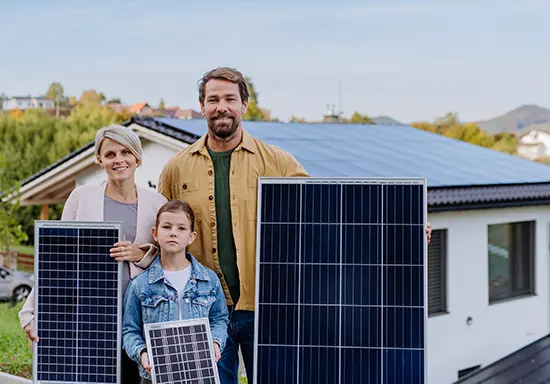
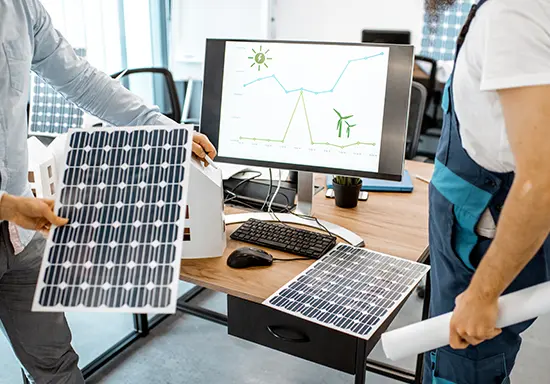
Yes — solar panels work in Ireland. This is the single most common question Irish homeowners ask, and the answer is a clear yes. The detail matters, though, so here is the full honest picture.
How Solar Panels Actually Work
Solar panels generate electricity from light — specifically, from photons hitting silicon cells in the panel. This is a photovoltaic process, which is why solar panels are often called PV panels. Critically, this process does not require direct sunshine. It works on diffuse light — the kind that reaches you on an overcast day.
On a bright, cloud-free day in summer, your panels will produce close to their rated output. On a grey January afternoon, they will produce significantly less — perhaps 10–25% of that maximum. But they are still producing electricity. They do not stop working when the sun goes behind a cloud.

Ireland vs Germany — The Most Useful Comparison
Germany is the most instructive comparison for Ireland. Germany has installed more solar capacity than almost any country in the world — it regularly generates significant portions of its electricity from solar PV. And Germany receives less annual sunshine than Ireland's sunniest regions.
The south of Germany gets roughly the same solar irradiance as the south of Ireland. Northern Germany gets less. Ireland's south coast — Cork, Waterford, Wexford — gets more sunshine hours annually than most of Germany. Even the west of Ireland, which is wetter, receives enough solar resource for panels to be economically viable.
If Germany can make solar work at scale, Ireland absolutely can. The economics are not the same — Germany has different energy prices, different incentive structures — but the solar resource argument is settled.
What Ireland's Solar Resource Actually Looks Like
Ireland receives approximately 1,100 to 1,400 kilowatt-hours of solar irradiance per square metre per year, depending on location. The south and east get the most. The north and west get less, but still enough.
| Region | Approx. Annual Irradiance (kWh/m²) | Suitability for Solar |
|---|---|---|
| South Coast (Cork, Waterford, Wexford) | 1,300–1,400 | Excellent |
| East (Dublin, Wicklow, Louth) | 1,200–1,300 | Very Good |
| Midlands (Kildare, Laois, Offaly) | 1,150–1,250 | Good |
| West (Galway, Mayo, Clare) | 1,100–1,200 | Good |
| Northwest (Donegal, Sligo, Leitrim) | 1,050–1,150 | Viable |
Figures are approximate averages. Local factors such as shading, roof orientation and panel angle significantly affect actual output.
Seasonal Variation — What to Expect Through the Year
Solar output in Ireland follows a predictable seasonal pattern. Summer produces significantly more than winter — this is expected and built into every system design and payback calculation.
A well-sized Irish solar system will typically produce 70–80% of its annual output during the spring and summer months (April–September), and 20–30% during autumn and winter. In practice, this means summer surplus energy is exported to the grid or stored in a battery, while you draw more from the grid in the darker months.
The SEAI Microgeneration Support Scheme allows you to be paid for electricity you export to the grid, which improves the economics of panels even when you produce more than you use.
Does Roof Direction Matter?
Yes, it matters — but not as much as people assume. A south-facing roof at the right pitch gets the most out of your panels in Ireland. East and west-facing roofs produce roughly 15–20% less than south-facing. Even a north-facing roof will generate some electricity, though it is not recommended as a primary installation surface.
If your best available roof faces east or west, solar can still make financial sense — the output reduction is real but manageable, particularly if you are a household that uses electricity throughout the day.
Flat roofs are no barrier. Panels on flat roofs can be mounted on angled frames, typically at 30–35 degrees, to optimise their facing. This is common on Irish commercial buildings and works equally well on residential flat roofs.
What About Rain?
Rain actually helps solar panels — it cleans the surface, removing dust, pollen and bird droppings that gradually reduce efficiency. Ireland's rainfall is a mild benefit to panel cleanliness, not a drawback. Panels are completely weatherproof and designed to operate in all weather conditions, including heavy rain, hail and frost.
What Output Can an Irish Home Realistically Expect?
A typical Irish home with a 4kWp solar system (approximately 10–12 panels) can expect to generate around 3,400–4,000 kWh of electricity per year in the south of Ireland, and slightly less further north. The average Irish home uses approximately 4,200 kWh annually.
This means a well-sized system could offset a significant proportion of your electricity usage — often 60–80% over the course of the year when battery storage is included, or 30–50% without battery storage depending on your usage patterns.
For current SEAI grant figures, output estimates based on your specific location, and approved contractor lists, visit seai.ie or irish-energy.ie — our energy cluster partner site. We deliberately do not publish grant figures here because they change and we will not risk giving you outdated information.
Frequently Asked Questions
Yes, solar panels work in winter in Ireland. Output is lower than summer because the days are shorter and the sun is lower in the sky, but panels still generate useful electricity throughout the winter months. A south-facing roof will outperform east or west-facing in winter, but any well-installed system will contribute to your electricity needs year-round.
Yes. Solar panels generate electricity from daylight — diffuse light on a cloudy day still produces power, typically around 10–25% of peak output. Modern panels are increasingly efficient at low light levels. Ireland's overcast days reduce output but do not stop solar generation entirely.
Ireland gets approximately 1,100–1,400 kWh of solar irradiance per square metre per year depending on location, with the south and east getting the most. This is enough for solar to be economically viable. Germany, which installs far more solar than Ireland, receives less annual sunshine than Ireland's sunniest regions.
No. Solar panels work from daylight, not direct sunlight. They generate electricity even under cloud cover, in diffuse light, and during overcast conditions. Direct sunshine produces more output, but it is not required for the panels to function.

Home Solar Panels Ireland
Practical, honest information about solar panels for Irish homeowners. We explain how solar works in Ireland, what it costs, and whether it makes sense for your home — without the sales pitch.