When an Irish homeowner says they want solar panels, they usually mean a grid-tied PV system — and that is the right choice for most people. But there are four main system types, and understanding the differences helps you make a better decision and have a more informed conversation with installers.
The Four Main Solar System Types
| System Type | How It Works | Best For | Relative Cost |
|---|---|---|---|
| Grid-Tied (no battery) | Panels feed your home; surplus exports to the grid | Most Irish homeowners — simplest and most cost-effective | Lowest |
| Grid-Tied with Battery | Panels feed home; surplus charges battery; battery discharges in evening | Households with high evening usage or time-of-use tariffs | Medium |
| Hybrid | Grid-tied with battery, plus grid backup charging when rates are low | Homes with EV or heat pump; maximum self-sufficiency | Higher |
| Off-Grid | No grid connection; panels and large battery bank supply all power | Rural properties without grid access; outbuildings | Highest |
Grid-Tied Solar — The Standard Irish System
The vast majority of Irish residential solar installations are grid-tied systems. Your panels generate DC electricity, an inverter converts it to AC, and it flows into your home's circuits. Anything you do not use immediately is exported to the grid, and you receive a payment for it under the Microgeneration Support Scheme.
When your panels are not generating enough — at night, on very overcast days, or during high-demand periods — you draw from the grid as normal. Your meter records both import and export.
This is the right system for most Irish homeowners. It is the simplest, cheapest, and most reliable option with the least to go wrong.
Adding Battery Storage
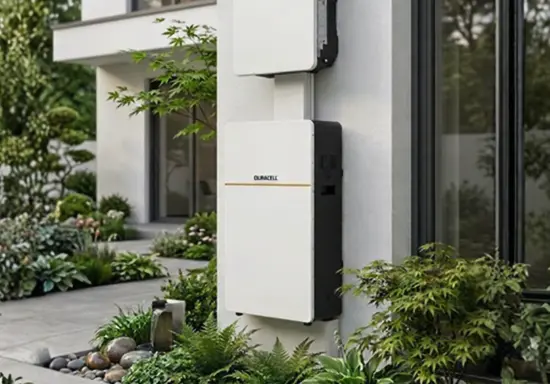
The limitation of a grid-tied system without battery storage is timing. Your panels generate most electricity in the middle of the day, but most Irish households use most electricity in the morning and evening. Without a battery, you export your midday surplus and then buy electricity back in the evening at full rate.
A battery fixes this. It stores your midday solar surplus and releases it in the evening, dramatically increasing your self-consumption and improving your savings. The tradeoff is cost — a home battery typically adds €3,000–€6,000 to the system price.
Battery Makes Most Sense When:
- You are on a time-of-use electricity tariff with expensive evening rates
- Your household has high evening electricity use
- You have an EV you charge at home in the evening
- You want greater energy independence
- Your system is oversized for your daytime use (large roof, low daytime occupancy)
Battery Is Less Compelling When:
- Someone is home during the day using solar electricity directly
- You are on a flat-rate electricity tariff
- Budget is the priority — panels alone have a faster payback
- Your system is modestly sized relative to your usage
Hybrid Systems — Solar, Battery and Smart Grid Charging
A hybrid system goes one step further. As well as storing solar surplus in a battery, a hybrid inverter can also charge the battery from the grid at off-peak rates — typically overnight when electricity is cheapest under a night rate or smart tariff — and use that stored electricity during expensive peak periods.
For homes with heat pumps, electric vehicles or high overall electricity consumption, this can produce significant savings. The system effectively becomes a smart energy management platform rather than just a solar installation.
Off-Grid Solar — A Specific Use Case
Off-grid solar is a fundamentally different proposition. Without a grid connection to fall back on, the system must be sized to cover all your electricity needs — including winter nights and extended overcast periods. This requires a much larger battery bank and usually a backup generator for resilience.
Off-grid is appropriate for rural properties that are not connected to the grid, outbuildings, holiday homes in remote locations, or as a deliberate lifestyle choice. It is significantly more expensive and complex than a grid-tied system and is not the right choice for most urban or suburban Irish homes.
What Size System Does an Irish Home Need?
2-Bed Home
6–8 panels. Annual usage approx. 2,500–3,500 kWh.
3-Bed Home
8–10 panels. Annual usage approx. 3,500–4,500 kWh.
4-Bed Home
10–14 panels. Annual usage approx. 4,500–6,000 kWh.
A good installer will size your system based on your actual electricity bills and roof space — not just house size. Homes with EVs or heat pumps typically need larger systems.
Frequently Asked Questions
The most common setup for Irish homes is a grid-tied solar PV system, sometimes with battery storage added. A grid-tied system without battery is the simplest and cheapest option and suits most homeowners. Adding a battery increases self-consumption and savings but adds to the upfront cost.
A typical 3-bed Irish home suits a 3–4 kWp system (8–10 panels). A 4-bed home typically needs 4–6 kWp (10–14 panels). Homes with electric vehicles, heat pumps or high electricity usage benefit from larger systems. A good installer will size your system based on your actual electricity bills.
Yes, in most cases. If your existing inverter is a hybrid inverter, battery storage can be added relatively straightforwardly. If you have a standard string inverter, adding a battery may require replacing the inverter with a hybrid model, which adds cost. Get a quote from a qualified solar electrician before assuming it is a simple upgrade.
A hybrid inverter manages both solar generation and battery storage in one unit. It converts DC electricity from your panels to AC for your home, charges and discharges a connected battery, and manages the flow of electricity between your panels, battery, home, and the grid. Hybrid inverters cost more than standard string inverters but are required if you want battery storage.

Home Solar Panels Ireland
Practical, honest information about solar panels for Irish homeowners. We explain how solar works in Ireland, what it costs, and whether it makes sense for your home — without the sales pitch.